
Labour Chancellor Rachel Reeves has revived the government’s northern rail ambitions, telling the public at the Labour conference in Liverpool that the party will “push ahead” with Northern Powerhouse Rail.
The idea, first proposed more than a decade ago, would create a high-speed link between Liverpool and Manchester, with further connections going towards Leeds and Sheffield.
Reeves’ promise adds to those made by previous governments, including the headline pledge to set aside £12 billion for the Liverpool and Manchester corridor as part of the wider Network North package.
Government officials continue to say that a Liverpool–Manchester route via Warrington Bank Quay and Manchester Airport is central to the plan, yet detailed proposals have been pushed back repeatedly. For regional leaders such as Liverpool Mayor Steve Rotherham, this drawn-out process has turned into what he calls a “decade of uncertainty.”
For Ministers, the argument is straightforward, better rail means more economic growth, sustainable travel and a better-connected jobs market. But until routes are confirmed and construction is underway, doubts will continue.
Reeves understands why people are cynical. “Often politicians say something and they don’t deliver, and that’s certainly been the case with Northern Powerhouse Rail. As a Leeds MP I know that all too well. But we also understand we need to get the project right.”
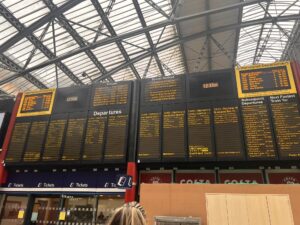
Commuters at Liverpool Lime Street Station, voiced a mix of scepticism and hope. Steve, 52, a station manager from Walton, dismissed the latest promise as “all lies,” saying he’s heard it many times before. “You’re talking billions, That money could go on things that would improve the city now, like cleaning up deprived areas such as Kensington, or finally building a train connection to Liverpool Airport.”
Ian, 55, also from Liverpool, was equally sceptical. “You’ll be my age by the time it happens ,if it ever does,” he said, adding that he has “zero trust in this government.” In his view, the past year has “destroyed a hundred years of work by the party.” Faster trains, he argued, “shouldn’t be the priority” when the country is in such a difficult state.
Not everyone shared that view. Mohamed, 44, who lives in Liverpool but commutes daily to Manchester, said the project would make a real difference. “Time is money, if you can get somewhere faster, it helps everyone,” he said. “Sometimes the train takes longer than driving, so people give up on it. Other countries do this better. In Morocco, the high-speed service cut Tangier–Rabat to about an hour and 20. People choose the fast train. If we get something similar here, it’ll be good for citizens.”
The government had promised to publish route details for the Liverpool–Manchester line “in the coming weeks,” back in June, but those plans never emerged. And until those plans are finally laid out the public and local leaders are left in limbo.