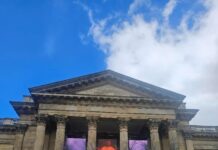

A nationwide initiative to raise awareness of the often-overlooked contributions of the British Indian Army during the Second World War has been launched by The Royal British Legion in collaboration with Liverpool John Moores University (LJMU).
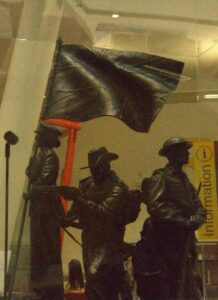
The sculpture depicts female Hindu soldier holding the Royal Governor’s flag atop a rocky cliff, accompanying her are Muslim, Gurkha, Sikh and Bangladeshi soldiers.
Symbolising the unity and diversity of the British Indian Army, this work aims to celebrate the camaraderie the soldiers from India, Pakistan, Bangladesh, Sri Lanka and Nepal, and their contribution in fighting fascism.
Hussain said: “From start to finish I would say the process took about 10 years.”
The pre-partition British Indian Army is often referred to as the ‘Forgotten Army’ due to the lack of recognition it received for its vital role, particularly during the Burma Campaign.
The Burma Campaign was led by Field Marshall William Slim, commander of the fourteenth army, where allied forces fought the Japanese in Burma (known today as Myanmar) in one of the longest and most brutal campaigns in the Second World War.
![Image of opening night performance.[photographed by Toby Roberts]](https://merseynewslive.co.uk/wp-content/uploads/2025/09/Perform-statue-300x200.jpeg)
This lost history can be attributed to geopolitical, racial, and historical factors, a wrong that the Royal British Legion in trying to correct.
As part of the project a website has been launched to commemorate the exhibition and share more details about the ‘Forgotten Army’:
https://www.ljmutheforgottenarmy.org/
Antony Metcalfe, from the Royal British Legion, said: “The resources that were produced for tonight are going to go around the country, to encourage students, young people and families to have those conversations.”
![Image of opening night performance.[photographed by Toby Roberts]](https://merseynewslive.co.uk/wp-content/uploads/2025/09/Flag-300x200.jpeg)
The site includes:
- Documentation of the performance depicting the figures in the statue and telling their story (to be added shortly),
- Exclusive access to a series of shadow puppet animations by LJMU student Cole Morris, exploring different aspects of Indian involvement including Indian wartime propaganda,
- A timeline documenting the history of the pre-partition British Indian Army, from the 1920’s to the end of the Second World War,
- A fascinating photography archive depicting Commonwealth soldiers,
- Information about interviewees involved in the research,
- A “Share Your Family Story” section.
The website asks South Asian families in the UK to share their stories and pictures of family members who served.
For more information on how to share your family story, visit:
https://www.myfamilylegacy.org.uk/.
Or, to find out more about the ‘Forgotten Army project’ including the exhibition at Liverpool Central Library visit: