
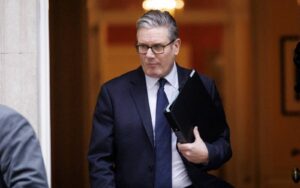
Kier Starmer resigned as Prime Minister this morning after facing mounting pressure from within the Labour Party to step down. Sir Keir outlined the timetable for his departure in a speech outside 10 Downing Street, as political attention turns towards newly-elected MP Andy Burnham as a likely successor.
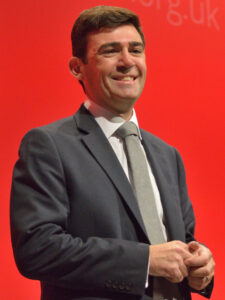
Mr Burnham, who stood down from his role as Mayor of Greater Manchester after being elected the Member of Parliament for Makerfield last week, has stated he will be in the leadership race, with no further candidates emerging at this stage. The Aintree-born Evertonian, 56, made his way to London this morning to be sworn in as an MP.
Elsewhere, the Prime Minister announced he would leave his role, stating he will begin the process on July 9, ending by the summer recess to “ensure a new leader is in place before Parliament returns in September”. This is the process we can expect as the country awaits to see who will be appointed the next Prime Minister.
How the next Prime Minister will be decided
The next leader of the Labour Party, and therefore the next Prime Minister, won’t be voted in by the entirety of the British electorate. Any MPs wishing to become the party’s next leader need to be nominated to stand as a candidate in an internal Labour leadership contest.
Nominations to become a candidate must be supported by 20% of members of the Parliamentary Labour Party — equal to 81 MPs — as well as 5% of Constituency Labour Parties or at least three affiliates, of which at least two must be trade unions making up 5% of affiliated membership.
The rules were changed at the 2021 Labour Party Conference, raising the threshold for nominations from 10% to 20% of MPs. This is a deliberately high bar: the threshold for PLP nominations effectively limits the maximum potential number of candidates in a leadership election to five.
All members of the party who have had continuous membership of at least six months prior to a timetable for the ballot being announced are eligible to vote.
Nominations are expected to open on Thursday, July 9 and close on Thursday, July 16, with a leader to be elected by September 1 if a contested election is held.
A timetable for the contest will be decided by the party’s National Executive Committee (NEC) in an emergency meeting, and the party rulebook states that results “shall be declared at a session of party conference.” This means the outcome could be announced at Labour’s annual conference in September at the latest. The annual conference will be held in Liverpool.
Now that Sir Keir has resigned, a formal Labour leadership contest is automatically triggered. Here is how the process works under the party’s current rules.
How the Labour leadership contest could unfold
There are theoretically two ways to achieve one almost certain outcome:
- This is the scenario many Labour figures are privately hoping for. If a single candidate clears the thresholds, they can become leader unopposed, without a members’ ballot — Gordon Brown became leader this way in 2007. Burnham is already the overwhelming frontrunner. He confirmed his candidacy shortly after Sir Keir’s resignation announcement, and Wes Streeting, who was seen as a potential rival candidate, endorsed Mr Burnham almost immediately. Mr Burnham’s allies have said he already has the numbers required to reach the 81-MP threshold. If no other candidate can also gather 81 MP nominations, then Mr Burnham would be confirmed as leader without a membership ballot. He would then proceed almost immediately to become Prime Minister. With MPs only able to back one candidate at a time, it would be it very difficult for a rival to assemble the required support if Mr Burnham hoovers it up first. This would be the fastest possible route, and there is clear appetite for it. Some within the party have expressed hopes of avoiding a messy, drawn-out contest, and if the party decides to have a “coronation,” Mr Burnham is expected to be the next leader of the country by mid-July.
- If another candidate can also secure 81 MP nominations, the contest goes to the full party membership vote. In the weeks leading up to Burnham’s win in Makerfield, a few names were touted as potential candidates including Angela Rayner, Al Carns and Ed Milliband. No other MPs have declared their candidacy intentions at the time of writing. The scale of Mr Burnham’s dominance makes a serious contested race difficult. He is, as has been widely noted, described as “the only major politician in the country who enjoys positive favourability ratings” according to opinion polls. His Makerfield by-election win — defeating Reform UK in a seat where the party had swept the local council elections — strengthens his claim to be Labour’s biggest electoral asset.
Andy Burnham, the “King of the North,” is now the near-certain next Prime Minister of the United Kingdom. Whether he gets there via coronation or contest, the question for Labour — and the country — is whether his brand of pragmatic, community-rooted politics can rebuild the party ready to fight off Reform at the next general election.
Why did Keir Starmer resign?
After successfully contesting the 2024 General Election and toppling the Conservatives’ 14 years of electoral dominance, Sir Keir has been plagued by protests, scandal and U-turns during his two years in government. The result has been a sharp decline in his popularity as PM.
His approval ratings fell dramatically over the course of 2024, according to YouGov’s favourability tracker, with an Ipsos poll in November 2025 indicating he was the least popular Prime Minister since records began in 1977.
Roughly two-thirds of people believed the Labour Party was out of touch, unclear of what they stood for, weak, and untrustworthy. By January 2026, 75% of people had an unfavourable opinion of the PM.
The scandals were serial. In September 2025, Angela Rayner resigned as Deputy PM following an investigation into her tax affairs. Then in December 2024, Sir Keir had appointed prominent New Labour figure Peter Mandelson as British Ambassador to the United States — a decision that backfired catastrophically when, in September 2025, the extent of Mr Mandelson’s relationship with convicted sex offender Jeffrey Epstein became public as the Epstein files were released.
The fallout was severe: the Prime Minister’s Chief of Staff Morgan McSweeney resigned in February 2026, and his Director of Communications Tim Allan resigned the following day.
The electoral picture was just as dire. In the May 2026 local elections, Labour lost control of over half the councils up for election, shedding over 1,400 councillors — the single largest loss in a single local election in the party’s history. Reform UK and the Green Party made their highest gains ever.
Labour also suffered a historic defeat in the 2026 Senedd election, failing to win either a majority or plurality in the Senedd for the first time in its history, losing to Plaid Cymru. This all came off the back of a by-election in Gorton and Denton in which the NEC refused to let Andy Burnham stand. The party went on to lose the seat to the Green Party.
Then on May 14, 2026, Josh Simons resigned as MP for Makerfield to allow Mr Burnham to stand for a seat — it was the first time since the 1965 Leyton by-election that a by-election had been triggered specifically to provide a vacancy for an individual not currently in Parliament. This time, the NEC approved Mr Burnham’s candidacy.
Mr Burnham won the by-election with almost 25,000 votes and a majority of over 9,200, exceeding expectations from opinion polls which had projected he would win by a narrow margin over Reform UK. Turnout was 58.8%, the highest for a parliamentary by-election since Brecon and Radnorshire in 2019. With Mr Burnham back in Parliament, the Prime Minister’s position collapsed within days.