
As LGBT+ history month comes to a close, older lesbians recall coming out, growing into their sexuality and reflect on the experiences of lesbians then and now.
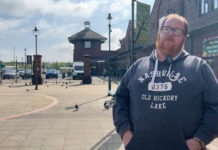
Joolz, 60, describes the fear of facing up to her sexuality and reaching out for support and connection.
“There was a tiny advert in the Liverpool Echo, ‘do you think you’re gay or bisexual, ring this number if you want support,’ I looked at that advert for weeks and weeks until the night I got drunk and got the courage to ring.”
Joolz recalls at 18 the fear of making that first call and hoping no one else could hear her talking, her breakthrough was when the woman at the end of the phone invited her for drinks later that evening.
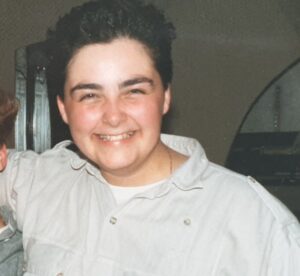
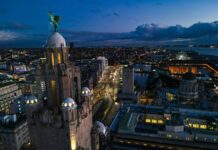
“I put my coat on, and I jumped the bus into Liverpool…I remember sweating and shaking, I was terrified, I walked up Bold Street and I walked round to Doctor Duncan’s and there was a whole load of women in there, laughing and smiling and joking and winding each other up.”
“It was such an amazing first experience, you don’t realise how frightened you are until you relax.”
Joolz describes how from there on in, she found her feet in that friendship group, the gay scene, music and the alternative punk scene. “It was like being born, you went through the pain and trauma of being born and then you went out into this incredible world.”
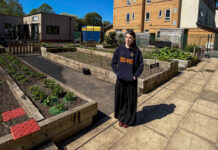
Valerie Smith (not her real name) 66, also found solace in the punk scene as a young lesbian. “I came out when I was about 17 and I came out during the punk era, I started to go to Eric’s club on Mathew Street because of the other people that went like Pete Burns and Holly Johnson and I just felt really at home there and I felt fine to be myself.”
Smith got involved with local political groups fighting back against Section 28, a Conservative government policy brought in in 1988 which banned the promotion of and the teaching of the acceptability of homosexuality in schools and was repealed in 2003 in England. She recalls protesting outside local TV news studios against the policy: “Granada Reports used to be based at the Albert Dock back then and so we did have demonstrations outside there.”
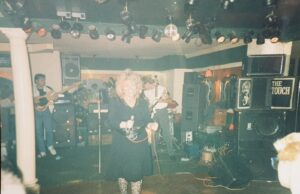
Smith also joined marches in London, Manchester and Liverpool. “These marches were really big at the time, a few thousand and people noticed, obviously, they must have done because it was scrapped.”
She recalls experiencing homophobic abuse: “There was one guy used to just stare at me and say dyke, dyke, dyke, in the street.”
Both Smith and Joolz describe a really strong supportive network of other lesbians that gave them a sense of safety despite a wider lack of acceptance for the gay community at the time.
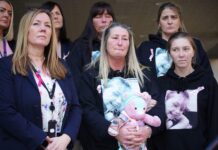
As a young lesbian in the 90’s, Joan Burnett, 60, found solace in the Liverpool theatre scene when she started working at the Liverpool Everyman. “I always say the Everyman saved my life because I fell into working with the biggest bunch of queers in there and lots of really supportive straight people so you know it was just like a gift really.”
Burnett recalls how gay men at the time would fear violence if they were openly out but for women they often experienced verbal abuse: “For women there’s also the kind of derogatory thing of you’re not a real woman, ‘you look like a man,’ ‘you want to be a man,’ ‘you know if you have sex with a man it would cure you,’ all those horrible things still get said but were really overt then.”
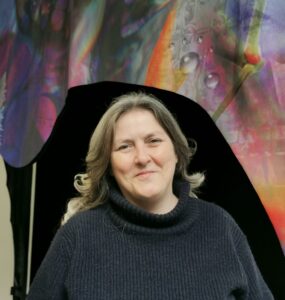
Burnett moved to Nottingham for a time and describes the effects of section 28 at the time. “At Nottingham Playhouse I was to do the backstage tours and we had a production of The Picture of Dorian Grey, I always remember a teacher saying to me, as they were GCSE age school kids we were showing around, he was like ‘don’t mention the gay thing we’re not allowed’.”
All three women described the struggle with being open with their families and feeling unsupported by them but how being out and visible was a form of activism in itself by pushing back and refusing to stay underground.
Burnett says that societal shifts in attitudes since the 90’s mean families are more accepting overall. “I’m not saying everybody because there’s still a lot of prejudice out there from people’s families and we’re unique really that we suffer prejudice from our own families like that but for women I think it got better.”
However, conflicts in the lesbian community have arisen in recent years about the rise in trans identities in young women and how young lesbians might be affected by this, alongside differing opinions about the emotive issue of inclusion of transwomen in lesbian spaces.
Joolz said: “I was your classic tomboy, I always had my jeans, I was climbing trees, I’m terrified these days that if I was born five years ago I would have been put on puberty blockers. If I had homophobic parents that don’t know you can be a tomboy you’re seen as born in the wrong body, I think it’s the absolute epitome of homophobia.”
Smith echoes some of these concerns and believes that lesbian rights may be going backwards. She was uncomfortable using her real name for fear of backlash or harassment at her place of work: “Women get abuse on the streets from trans activists, my opinion isn’t very popular with a lot of people I know, so I feel very silenced and a lot of women feel silenced.”
However, Burnett said: “I think that the transphobia thing is manufactured it’s very very interesting that it’s such a tiny minority of people but it’s absolutely weaponised.”
Burnett said: “Trans women are being so picked on, I have such fellow feeling with trans women because I’ve been called not a real woman so often in my life for being lesbian.
“I have friends who don’t feel that trans women are women, that’s not really what I’m getting at, what I’m getting at is we should stick up for trans people.”
Burnett said that she fears that the trans rights debate is part of a wider right wing political swing against same sex attracted people. She said: “I definitely feel there’s a right-wing agenda really to shove us back in the closet.”
All three women have concerns about the future for younger lesbians. The LGBT+ landscape in Merseyside has changed dramatically in the last 30 years from the scrapping of Section 28, the legislation of gay marriage in 2013 and protections for gay and lesbians and gender reassignment (trans people) in the equality act 2010.
However, despite progress with protections legally these newer challenges and conflicts have created divisions within the lesbian community and there are fears and frustration on both sides of these divides.