

The North West Ambulance Service (NWAS) has cautioned that as many as 3,000 defibrillators are offline and no longer usable in emergencies.
Cardiac arrest is the leading cause of death in the UK, and defibrillators are a vital tool in cardiac arrest emergencies.
Survival rates decrease by up to 10 per cent each minute without intervention. However, when CPR and defibrillation are used, it can double the chances of survival.
NWAS uses a national system called The Circuit, which is operated by the British Heart Foundation. It directs 999 callers to their nearest defibrillator. However, devices must be regularly checked and registered to remain on the system.
Mark Evans, Community Engagement Lead at NWAS, said: “Often, one of the myths about these devices is that we are responsible for them once they are put up. However, that is not the case. There needs to be a dedicated person who ensures that, when needed, it can be used.”
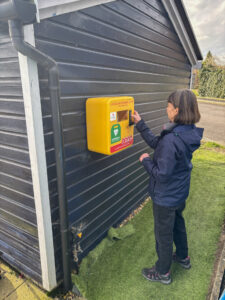
After 90 days, devices are removed from the system if they are not checked. This is to prevent someone from being sent to a device that won’t work in an emergency.
However, the main issue is not due to faults, but rather that no one is responsible for maintaining the devices after installation.
NWAS has been working with local communities to reconnect the devices with the people responsible for their maintenance. Recently, they have successfully brought more than 800 defibrillators back online.
The service is now urging anyone responsible for a publicly accessible defibrillator to register and maintain it through The Circuit.
Real-life cases across the region highlight the importance of accessible and working defibrillators.
David Pearson, 86, survived a cardiac arrest after his friend Andrew Lockwood performed CPR and used a nearby defibrillator before paramedics arrived.
The North West Ambulance Charity has been campaigning to improve access to working devices and replacement parts.
Jemma Kinch, Head of Charity, said: “Over the last 12 months, we’ve also helped fund community officers who’ve been reinstating defibrillators that were offline and unavailable.”
Despite their proven impact in emergencies, public defibrillators are used in less than 10 per cent of out-of-hospital cardiac arrests in the UK.
NWAS hopes its campaign will encourage more communities to take ownership of their devices and ensure they are ready for public use, with over 11,000 publicly accessible defibrillators available in the North West.













 has cautioned that as many as 3,000 defibrillators are offline and no longer usable in emergencies.)