

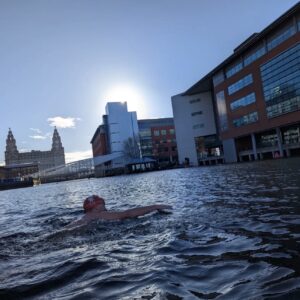
Cold-water swimming is helping some Liverpudlian’s survive January.
As a way to beat the ‘January blues’ many have turned to cold-water swimming with winter being a peak time of year for mental struggles like Seasonal Affective Disorder (SAD).
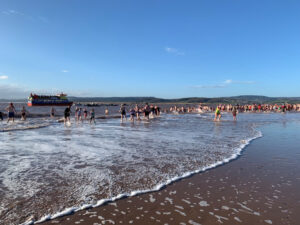
The practice has popular across Merseyside, in places such as Crosby beach, New Brighton and the Albert and Princes Dock in Liverpool, where communities such as Swim Liverpool have formed.
Mike Alexander created the Swim Liverpool community in 2019 as an outlet for wellbeing and a way for people to disconnect from Liverpool’s bustling city life and connect with nature.
He said: “I saw the docks and I thought, yeah, this is a good place to go for a swim in the city. Eventually I got in touch with the landowner, got a license and everything in place. And yeah, it makes you feel like you’re in nature.
“I think anytime you’re in water, whether it’s cold, warm, freezing, whatever, it feels good for your body.
“It takes the load off, your body, and your mind somehow. You’re away from everything. You could be in a race, even in a training squad when you’re swimming, you’re in your own little bubble.”
Cold water swimming is said to have many benefits for physical and mental wellbeing, due to the physiological response to cold water immersion.
It can stimulate the vagus nerve, which reduces anxiety and stress by helping people relax quicker.
It has also shown to help boost immune systems and reduce inflammation, with many people with SAD choosing cold water swimming to help their body and mind.
Amelia Tongue, 20, has suffered with SAD for 2 years. She cold-water swims for the mental health benefits.
She said: “I think, once you get in your fine – getting out is usually the worst part but I’m always proud of myself for getting in every time I do it, you’ll never regret it. It’s definitely a shock to the system but it makes you feel alive.”
According to Nuffield Health, approximately 2 million people in the UK experience SAD annually, around 3–5% of adults, especially during winter months.
SAD differs from regular depression due to its timing and triggers. SAD is a type of depression that occurs at specific times of the year, most commonly during autumn and winter when daylight hours are shorter.
Lex Lovell, an NLP practitioner gave her tips on how to cope with seasonal affective disorder.
She said: “What’s recommended is getting out into daylight as much as possible, using products such as light boxes, extra vitamin D, a healthy diet and exercise.
“Also, focus on your mindset – look for the good things in this winter period that you can’t usually do in the other seasons. In the winter period we usually focus on the negative things like dark mornings and cold weather, but we could look for the small positive wins.”
Featured image: Swim Liverpool Mike Alexander
@merseynewslive Cold water swimming & its benefits, as explained by Mike Alexander – read more later on our website! 🏊🏼♀️❄️🌊 #liverpool #coldwaterswimming #mentalhealth
♬ Everybody Wants To Rule The World X Electric Love – darcy stokes