

For decades, the path to a neurodiversity diagnosis has been a quiet, clinical journey through GP surgeries and specialist referrals.
But in 2026, the first “consultation” for thousands of young people in the UK is no longer happening in a doctor’s office – it’s happening on a TikTok “For You” page.
And data compiled by Merseynewslive is supporting this stark change.
Under hashtags like #ADHD and #Autism, which have now amassed tens of billions of views, creators list common traits such as forgetting keys, fidgeting, or feeling overwhelmed in crowds as definitive signs of a neurodivergent brain.
@adhd_love 5 signs of ADHD in Woman 🩵🧠 #neurodivergent #neurodiversity #adhd ♬ original sound – rich & rox • adhd love
While this has sparked a global movement of self-discovery, it has also funnelled an unprecedented wave of patients into an NHS system that is currently buckling under the weight of its own waiting lists.
According to 2025/26 NHS figures, there are now 2.8 million people on ADHD assessment waiting lists alone in the UK.
In some regions, the wait time is five years.
We surveyed adults in the Merseyside/North West area, and the results suggest social media has become the primary gateway for neurodivergent discovery.
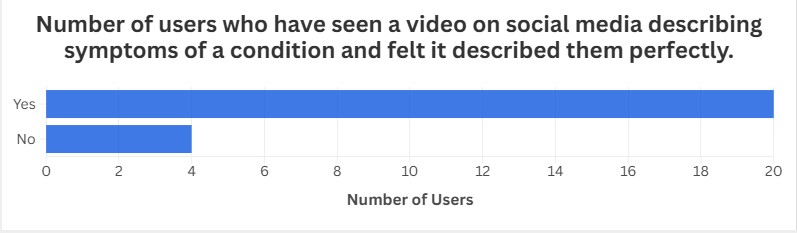
More than 83% of respondents stated they had seen TikTok content describing symptoms that they felt “perfectly described” them.
However, this digital awareness is fraught with inaccuracy.
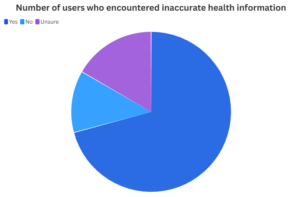
The survey revealed that 71% of users have encountered health information on social media that they later discovered was medically inaccurate.
One respondent who works on an autism panel said: “I feel that it’s raised awareness of neurodiversity… but also there is a lot of misinformation.
“I feel that people share a few traits which multiple people can have but the difference is that most don’t actively struggle with those traits.”
Despite these risks, the algorithm remains a powerful driver of clinical demand.
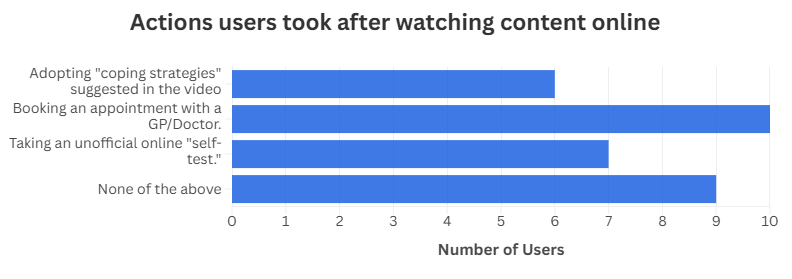
Over 40% of respondents took the direct action of booking a GP appointment after seeing neurodiversity-related content, contributing to the waiting lists currently causing a bottleneck in the NHS.
As of February 2026, an estimated 2.5 million people in England are living with ADHD, and the number of open referrals has sky-rocketed to more than 735,000.
New referrals for assessments increased by 17.3% in the last year alone, and trend experts directly link this to the “Digital Doctor” phenomenon.
However, the reality of seeking a formal diagnosis often leads to what many call “clinical limbo”.
A spokesperson for the NHS said: “There are inequities because NHS ADHD waiting times are very long, measured in years, and are increasing across England.
“Getting it wrong in those early years can lead to so many secondary issues that shouldn’t have to be part of ADHD.”
The “Minefield” of Online Advice
The danger lies in the TikTok algorithm. If you engage with one mental health video, your “For You Page” becomes an echo chamber of similar content.
Medical professionals are worried.
Dr James Arkwright, a specialist in neurodiversity at University of Surrey, said: “We are seeing a 150% increase in referrals compared to five years ago, with many ‘self-diagnosed’ via social media.
“While some are correct, many are experiencing ‘symptom overlap’ with anxiety, sleep deprivation, or simply the effects of heavy smartphone use.”
The rise in digital awareness has not come without a cost to accuracy.
A landmark 2026 study from the University of East Anglia (UEA) branded TikTok a “medical minefield”.
It revealed that 52% of ADHD-related videos and 41% of autism content on the platform contained misleading or unsubstantiated information.
Dr Eleanor Chatburn, of Norwich Medical School, said: “Mental health information on social media matters, because many young people now turn to these platforms to understand their symptoms.
“Misinformation can lead to the pathologizing of ordinary behaviours and, crucially, delayed diagnosis for those who truly need help.”
National NHS data from early 2026 shows a stark “postcode lottery” for adult assessments.
While some regions quote 18 months, patients in London, Kent, and Sussex are frequently being told the wait for an initial ADHD psychiatric assessment now stretches between five and seven years.
Even the “Right to Choose” pathway, a popular alternative allowing patients to see private providers funded by the NHS, is seeing its own surge.
Popular provider ADHD-360 currently lists average wait times of 44 weeks for many UK regions, as providers struggle to manage budgets and overwhelming demand.
Assessment vs Diagnosis
Experts argue that the “TikTok Effect” has shifted the public’s goal from seeking a medical assessment to demanding a medical confirmation.
Prof. Raja Mukherjee, Lead for Psychiatry at Surrey Medical School said: “Referring rates for ADHD have risen at almost identical rates to online searches since the pandemic.
‘’We have people coming to us saying, ‘I want a diagnosis of X,’ and if you don’t give them that specific diagnosis, they get really upset.
‘’You shouldn’t go for a diagnosis; you should go for an open-minded assessment.”
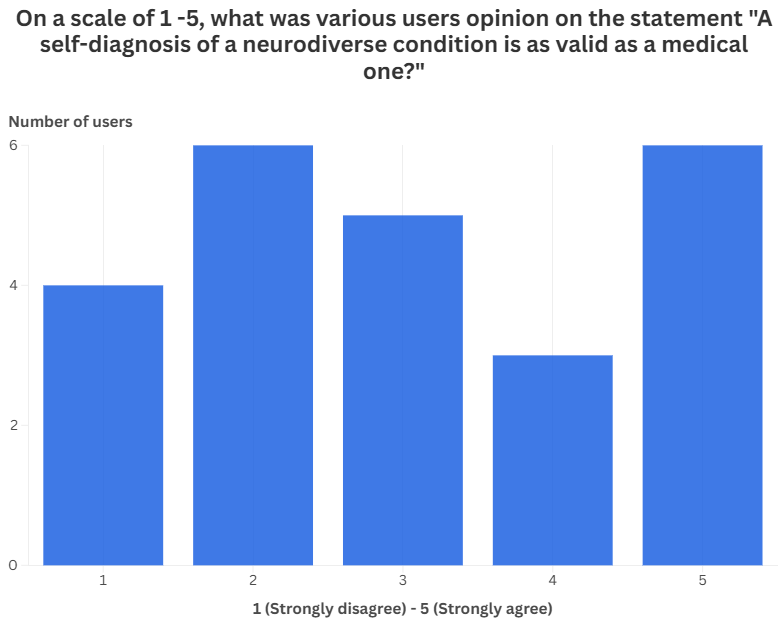
There were also mixed views on whether a self-diagnosis is as valid as a medical one.
While the “Digital Doctor” phenomenon has undoubtedly added strain to the healthcare system, for many, it has provided a vocabulary for a lifetime of struggle. As one respondent said:
“It made me feel significantly less alone.
“I always assumed something was wrong with me and that i was defective, until i saw other autistic people online discussing their experiences.
“I felt entirely understood for the first time.”
The study highlights a growing tension in the general population that feels increasingly empowered by online self-discovery yet remains caught in a system that lacks the capacity to validate those discoveries in a timely or accurate manner.