

As the clocks go back and daylight hours reduce, women across Merseyside are coming together to protect themselves during the darker evenings.
From community-led initiatives to university security apps, new actions are being established to help women feel safer outdoors in winter. While insisting that more should be done to tackle gender-based violence, Liverpool women are meanwhile refusing to let the problem define their evenings.

The seasonal shift at this time of year brings rain, snow, and frost, but also brings a rise in safety fears, leading to a change in many women’s routines.
In a 2025 national survey, 67% of women said walking alone at night dominates their safety concerns, according to Security Today.
Other common fears among women include harassment, cat-calling and being followed home. These fears are embedded in women’s lives, and grow as the winter months creep in.
However, some women are fighting back, joining forces through community groups that are created solely for the benefits of women.
Girls on the Go, a Liverpool-based group, host weekly women-only run clubs – offering a safe space where they can stay active, feel supported, and connect with like-minded girls.
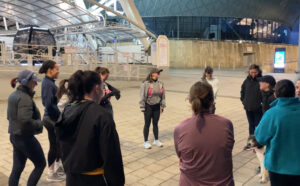
Stephanie Barney, co-founder of Girls on the Go, said winter feels like a curfew for women, but hopes their group makes running more accessible.
Ms Barney said: “I think the rise of run clubs is amazing…We try and make it as bright as possible, so with reflective bands, with torches. We try and run in groups, so that makes it a bit easier. I think there’s safety in numbers and just making sure that we have at least three staff on as possible, so no one is left behind.”
The group host regular runs in Liverpool every Thursday evening and Sunday morning, welcoming both first-time participants and experienced runners. Ms Barney said: “We try and encourage girls who’ve come by themselves to be with other girls who’ve come by themselves. So at least they have a buddy. And just making sure that our runs are, are as accessible and beginner-friendly as possible.”
The run club has grown in visibility and impact, partnering with brands like Uniqlo and Adidas to expand the opportunities for girls to stay active and feel seen.
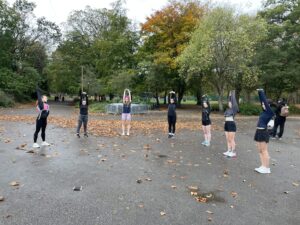
It’s not just grassroots projects that are creating safe spaces on the streets; universities are also stepping up to reduce safety concerns in winter.
Liverpool John Moores University has rolled out new safety initiatives and tools this academic year, starting Autumn off with a renewed focus on creating a safer campus.
The SafeZone App was introduced in September this year, connecting users with the University’s Security Team directly. From first aid calls, non-emergency help, and location sharing services, the SafeZone App is aimed at helping students and staff feel safe on campus.
Etienne Lewis-Jarvis, LJMU’s Vice President for Community and Wellbeing, said: “It’s getting dark now at four o’clock, or just past four [pm]; some lectures don’t finish until five or six [pm], so even if you’re feeling unsafe in them or if you’re walking back from the library or the SLB (Student Life Building) at early hours in the morning, you can still have that security team being there for your support.”

Other safety initiatives LJMU have in place include Report and Support, an online portal for harassment and sexual misconduct reporting.
Liverpool’s response to women’s safety is not limited only to campuses or community clubs; it’s becoming a city-wide conversation.
Students from various Liverpool universities recently discussed gender-based violence with Merseyside Police and the Police Commissioner’s Office, with hopes of educating Merseyside Police on how they can provide more support; Ms Lewis-Jarvis said: “People brought out their own experiences about gender-based violence…it was a really valuable discussion.”
These conversations are a vital part of pushing for change, with the hope that there’s a national shift toward tackling the root causes of male violence.
Ms Lewis-Jarvis said: “We’re telling them [women] to be safe, and they need to carry a key walking home, avoid walking alone, share their location, walk in better lighted areas…but the responsibility to avoid harm, rather than stopping men, is causing these problems. It’s not a privilege to have safety. It should be a right for women.”
As the nights grow longer, Merseyside women refuse to give up their evenings to fear; instead, they’re reshaping the city’s streets with strength.
Listen to how Liverpool women refuse to let fear define their evenings.
Featured image (c) Megan Wells